
The Geography of Racial (& Class) Segregation
How to At Least Briefly Stun a Typical High School Social Studies Class

Surprise. Segregation, a perennial reflection of something fundamentally awry, is again on the rise in most larger urban districts.1
The billionaire class, led by its disingenuous representatives, such as the (ostensibly innocuous) Bill and Melinda Gates Foundation, modestly fund, distract and feign ignorance of any connection to related economic injustice. Still, decadal census data can help trace massive housing and lending discrimination, infamously termed redlining, its repugnant odor lingering today.
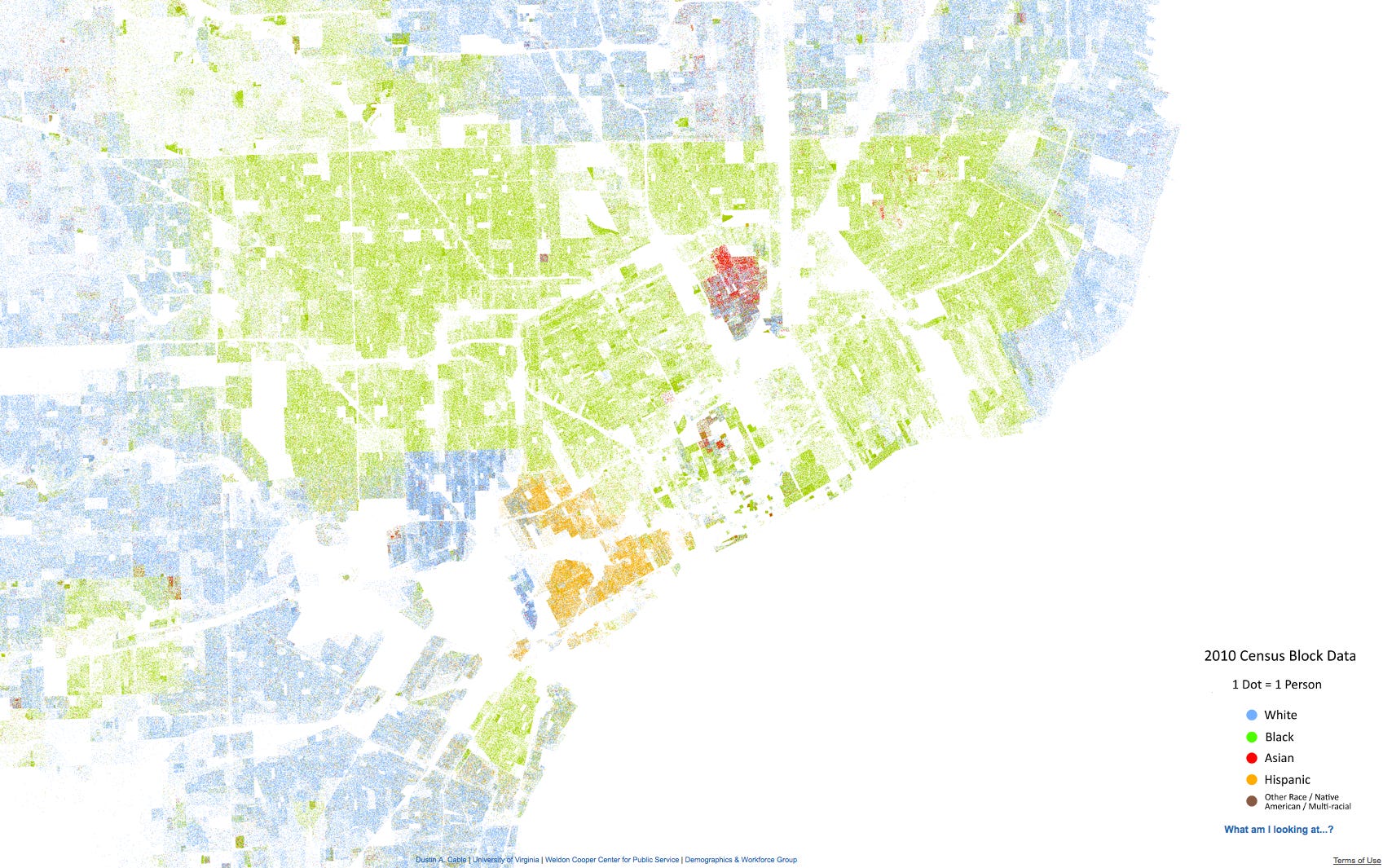
The detailed color-coded map below can visually unveil the roots of these intensified disparities.
This foundational assignment serves as a suitable reference in a variety of secondary social studies settings. Each year, I’ve used this introductory investigation as an entry point for meaningful discussion and further research in civics, economics, prelaw, US history or any civil rights course.
Teachers, feel free to hard-copy, adapt or modify this intro through urban geography readily available online. Student interest often begins with perplexed surprise.
An expansive resource can be easily accessed through examining the mapping of census data: FiveThirtyEight Project
Urging students to end with their own open-ended “exit question” can also prompt further meaningful conversation (sans cell phones, of course).
Comments welcome, as always.
Geography (of Detroit) Assignment:
1. LOCATE & LABEL key roads (use arrows in the margins for some identifications) of (a) 8 Mile (b) Woodward Ave (c) 9 Mile (d) Gratiot Ave (e) Grand River Ave (f) Michigan Ave (g) I-75 Freeway (h) I-94 Freeway & (i) Alter Road.
2. Label these cities: (j) Dearborn, (k) Grosse Pointe. Draw outline of (l) Windsor, Canada & (m) the Detroit River.
3. Now COLOR CODE the dot matrix of Detroit & the surrounding metro area using the key below.
I want to think that issues of race, inequality and segregation have improved but the evidence clearly states otherwise.
There is the illusion of advancement and a better world for all that can easily be shattered with just a little digging. I'm already spinning out over the repercussions and how far reaching this is when we consider the battles going on world wide.
It's depressing. I feel helpless in my ability to make a way to right these wrongs. How do we make changes in this world?
Step one in the equations is to bring to light the atrocities that continue exist, even while we are told things are so much better.
Step two? What tools do you give your students to offer them hope and realistic ways to promote change for the betterment of all?